
Professional Assistance for ITR Filing (FY 2026–27)
For expert guidance on tax planning in India 2026 and income tax return filing, you may consult:
Srijan Sharma
Chartered Accountant
Phone: +91-8439297833
Tax planning in India 2026 is as important as developing a country’s infrastructure and economy. As income tax rules keep updating and improving, people need to understand them properly. With smart tax planning tips, one can reduce liabilities, grow savings, and achieve long-term financial stability while staying fully compliant with the law.
Table of Contents
What is tax planning in India?
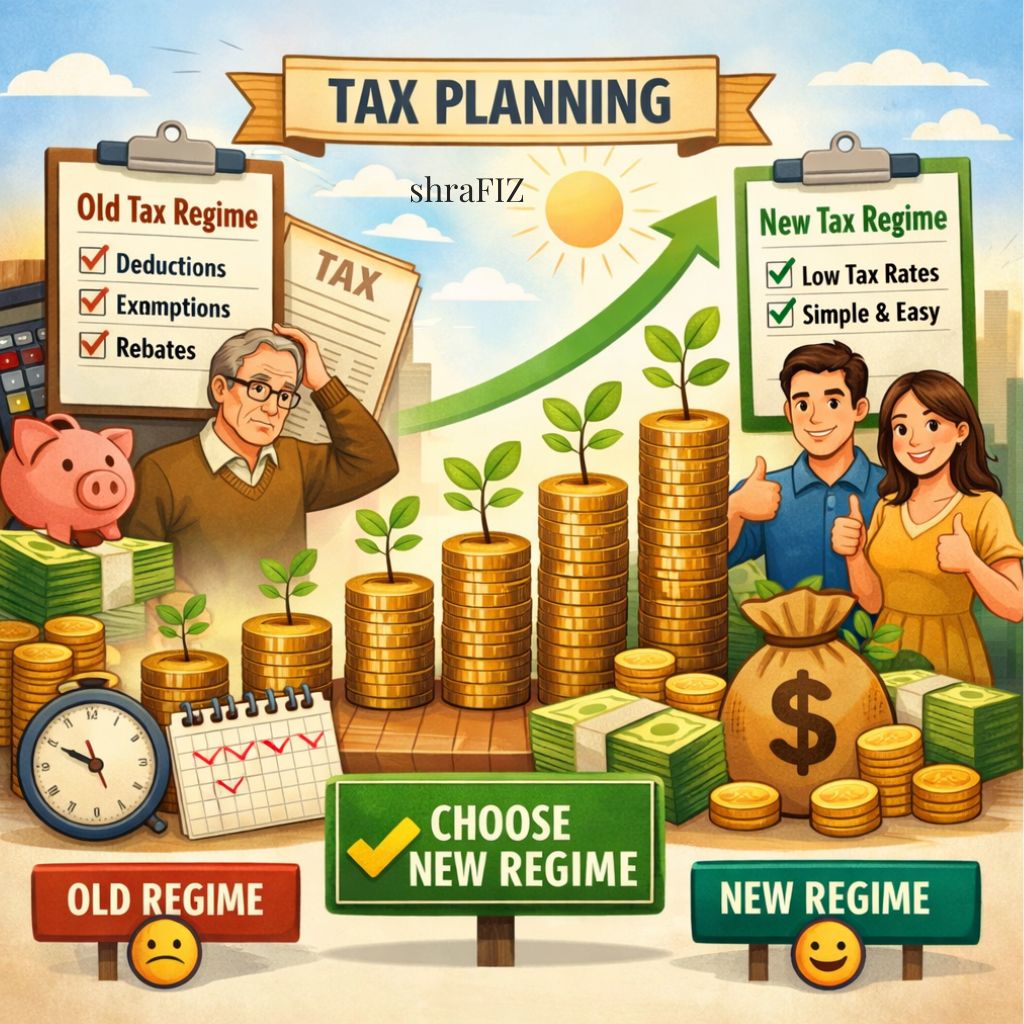
Tax planning is an essential term of financial planning and involves analyzing your financial situation, tax saving options, applying different strategies to reduce tax liability, and minimizing sudden burden.
Why tax planning matters?
Tax planning encourage person to think about their finances, plan for retirement, child investment, avoid last-minute hustle, minimize stress, and support long term goals. It involves selecting suitable investments, claiming deductions, and choosing a tax regime to optimize savings. With proper tax planning, one can safeguard their income and improve financial clarity.
- Reduces overall tax burden
- Improves financial discipline
- Prevents tax penalties and fines
- Helps you save more money
- Encourage retirement security contributions
- Boosts capital formation in the country
Key tax planning tips for 2026

Effective tax planning in India 2026 requires early preparation, correct regime selection, and smart investment choices. Combining deductions with disciplined investing improves wealth creation, and these tax planning tips will help you maximize benefits in FY 2026–27.
Start tax planning early
Early planning spreads investments across months, improves cash flow management, and helps select better financial products strategically; hence, begin planning at the start of the financial year.
NPS deduction 80CCD (1B)
Contribute to the National Pension System to claim an additional ₹50,000 deduction under Section 80CCD (1B). It reduces taxable income while building a retirement corpus.
Choose the tax regime early, from old to new
The old regime allows multiple deductions like 80C, 80D, HRA, and home loan interest. The new regime offers lower tax rates, a simplified tax structure, and reduced burdens by eliminating most deductions and exemptions.
Why choose a new tax regime?
- Lower tax rates compared to the old regime are beneficial for middle income earner.
- It is simple and easy to file, as there is no need to track multiple deductions.
- There is no requirement to invest in tax-saving schemes such as ELSS, PPF, LIC, and many more.
- Higher basic exemption limits up to ₹4 lakh and rebate section under 87A, income tax free is up to ₹12 lakh.
- It is considered a good option for young professionals who prefer liquidity over long-term locked investments.
Investing in ULIPs
Unit Linked Insurance Plans combine insurance with investment benefits. ULIPs provide tax benefits under Section 80C and tax-free maturity (conditions apply), making them useful long-term wealth-building tools.
Investing in Mutual funds Equity
Linked Savings Schemes (ELSS) offer tax deductions under 80C with a three-year lock-in. They provide market-linked returns and are ideal for investors seeking growth and tax savings.
New Financial Year 2026-27
The financial year 2026–27 brings fresh opportunities and responsibilities for taxpayers across India. With evolving income tax slabs, revised deductions, and digital compliance systems, understanding tax planning in India 2026 is essential for salaried individuals, business owners, and investors.
Changes in the New Finance Bill 2026-27
The Finance Bill 2026–27 introduces several updates aimed at simplifying compliance and promoting digital transparency. The government continues encouraging the new tax regime while improving reporting systems. Some expected highlights impacting tax planning in India 2026 include:
- Possible revision in income tax slab thresholds
- Enhanced digital verification of deductions
- Simplified ITR filing process
- Incentives for retirement savings schemes
- Increased focus on tracking high-value transactions
- Strengthened penalties for non-compliance
- Support for green and sustainable investments
These updates emphasize proactive planning and documentation. Taxpayers must stay updated through reliable sources like financial information zone to adapt quickly and apply the right tax planning tips.

Tax planning tips: Build Financial Security
Tax planning in India 2026 is not just about saving money; it is about building financial security. By applying smart tax planning tips, selecting the right tax regime, and investing in suitable instruments like NPS, ULIPs, and mutual funds, individuals can optimize savings and grow wealth. Smart planning today guarantees financial freedom tomorrow.
Frequently Asked Questions about Tax Planning in India 2026
-
How can salaried employees optimize tax planning in India 2026?
Salaried employees can optimize tax planning in India 2026 by applying smart tax planning tips such as tax slabs information, deductions under different sections, investing early and many others to ensure better savings and avoids last minute tax stress.
-
Which tax regime is better if FY 2026-27: old or new?
The new regime is suitable for the FY 2026, as higher basic exemption limits up to ₹4 lakh and a rebate section under 87A, income tax-free up to ₹12 lakh.
-
Should taxpayers stay updated about tax rule changes?
Yes, taxpayers should stay informed ensure better implementation of tax rules and laws, and they get updated every year.
-
Where can one get information about tax rule changes?
One should follow official government notifications, consult certified tax professionals such as a CA, regularly read financial information zone such as shraFIZ, and review updates.